Understand How AI Describes Your Brand
GoGlobal tracks sentiment with the exact prompt, model response, recommendation position, competitors, and citations that produced it—so teams can distinguish a real positioning issue from a noisy aggregate score.
Measure sentiment without separating it from answer context
Find recurring praise, objections, confusion, and risk themes
Compare perception across models, prompts, markets, and competitors
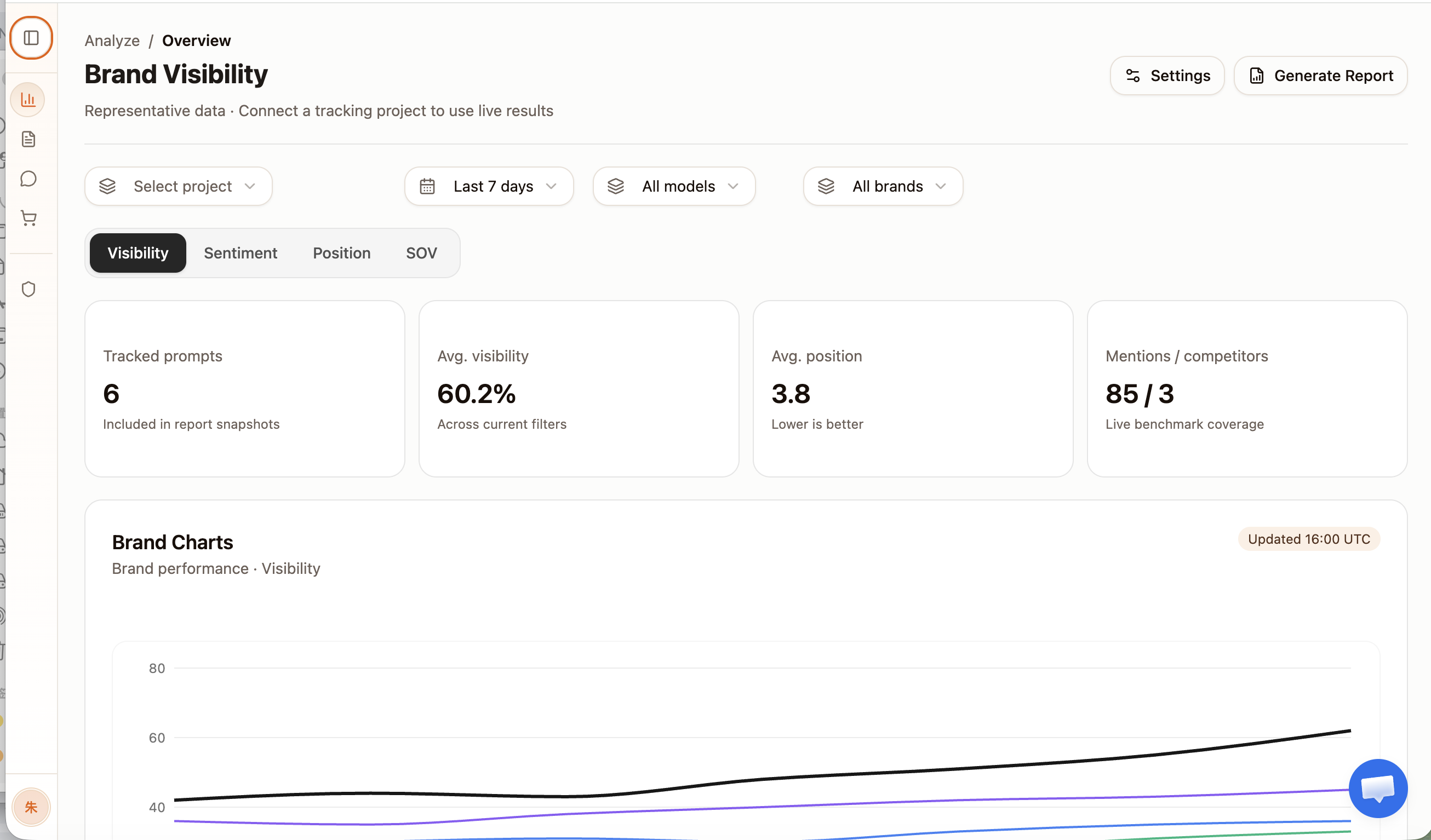
Brand sentiment overview
Tracked answers with prompt and source context preserved
Trusted by users from:



 Manus
Manus

Sentiment You Can Trace Back to the Answer
A single positive or negative score is easy to misread. GoGlobal keeps sentiment connected to the question, model, answer summary, brand position, competitors, and source evidence that shaped it.
Answer context
Open the response and prompt behind every important sentiment result.
Theme detection
Group recurring strengths, objections, confusion, and risk language.
Material changes
Focus attention on negative or shifting themes tied to valuable prompts.
How to monitor brand sentiment in AI search
Track prompts that invite evaluation
Include branded, comparison, alternatives, trust, pricing, and suitability questions where perception is visible.
Measure sentiment in full context
Review score, position, mentions, answer summary, citations, and competitors before classifying the result.
Group recurring themes
Separate isolated wording from repeated strengths, objections, product confusion, and reputation risks.
Respond with verifiable information
Improve unclear product facts, positioning, documentation, independent proof, and community context—then recheck the same prompts.
Monitor the language shaping trust before it becomes the default AI narrative.
Keep Sentiment Connected to Prompt and Position
The same brand can be praised in one use case and rejected in another. GoGlobal shows sentiment beside the question, model, position, mentions, and answer summary so teams can see what the score actually represents.
Sentiment in context
The question, model, position, and answer theme behind the score
ChatGPT · Position 2 · 4 citations
Gemini · Position 4 · 2 citations
Claude · Position 3 · 5 citations
Find the Themes Repeated Across AI Answers
Repeated language is more useful than one unusual response. Group praise, objections, product confusion, suitability claims, pricing perceptions, and trust signals into themes the team can investigate.
Recurring perception themes
Repeated strengths, objections, confusion, and risks
Prioritize Perception Risks With Commercial Context
Not every negative phrase deserves a campaign. Focus on recurring issues that appear in purchase-oriented prompts, reduce recommendation position, or create an advantage for direct competitors.
Perception risk queue
Recurring issues ranked by intent and recommendation impact
Appears in 7 comparison prompts across 3 models
Reduces recommendation position on trust prompts
Repeated in 4 small-team recommendations
A More Explainable View of AI Brand Perception
Use sentiment as a diagnostic signal, with the context required to interpret it responsibly.
Prompt-level sentiment
Connect perception to the exact customer question.
Narrative themes
Group repeated strengths, objections, and confusion patterns.
Competitor context
See when perception creates an advantage for another brand.
Risk prioritization
Focus on material changes instead of every isolated phrase.
Who Uses GoGlobal Brand Sentiment
Brand teams
Monitor how positioning and trust language appear in AI answers.
Product marketing
Find inaccurate or outdated descriptions of capabilities and fit.
Communications
Investigate recurring reputation themes with source context.
Growth teams
Connect perception with recommendation position and share.
Frequently Asked Questions About Brand Sentiment
How GoGlobal measures, explains, and operationalizes brand sentiment inside its GEO workspace.
Explore GoGlobal GEO Features
Continue from this capability into the related measurement, analysis, and reporting workflows.
Related Product Capabilities
More Product Capabilities
Start With GoGlobal GEO
Put Brand Sentiment Into One Measurable GEO Workflow
Start with a brand, market, competitor set, and prompt portfolio. GoGlobal keeps the resulting visibility, citations, sentiment, competitive context, and reports connected.